Speedaire Air Line Filters for Cleaner, Drier Compressed Air
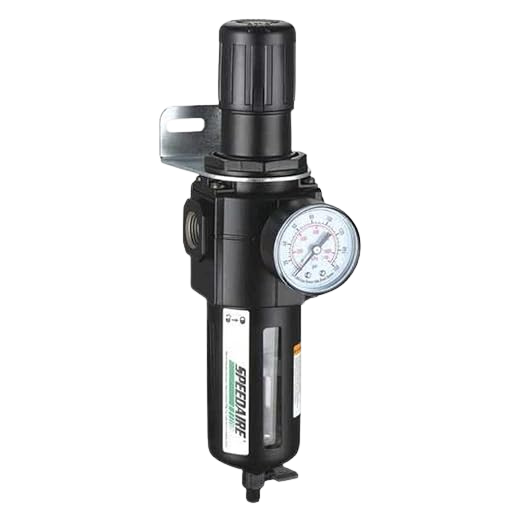
Dirt, moisture, and oil in a compressed air line cause tool wear, finish defects, and equipment failures. Speedaire air line filters pull those contaminants out before they reach the tools, keeping the whole system performing the way it should.
Why Compressed Air Filtration Is Critical for Tools and Equipment
Compressed air is never as clean as it looks. As the compressor pulls in ambient air, it also pulls in dust, pollen, humidity, and any other airborne particles in the environment. The compression process concentrates these contaminants and adds heat, which condenses moisture as the air cools in the tank and lines.
That moisture and debris flows right into the tools and machinery connected to the system unless a filter is in place. For pneumatic tools, contaminated air accelerates internal wear. For paint sprayers and sandblast equipment, it ruins the finish. For any equipment with precision valves or cylinders, it causes premature failure.
Speedaire pneumatic oil filters remove particulates and separate water from the air stream. Standard filter elements trap particles down to 5 microns, and coalescing filter elements go down to 0.3 microns for applications that need very clean air.
Speedaire filter bowls are typically semi-transparent polycarbonate or metal-bowl designs. The bowl collects separated water and particles at the bottom where they can be drained manually or automatically using an auto-drain valve.
Types of Speedaire Air Filters
- General purpose particulate filters for standard shop air
- Coalescing filters for high-purity air requirements
- Oil removal filters for paint, food, and pharmaceutical applications
- Filter-regulator combinations that clean and control pressure together
- Auto-drain models for hands-free condensate removal
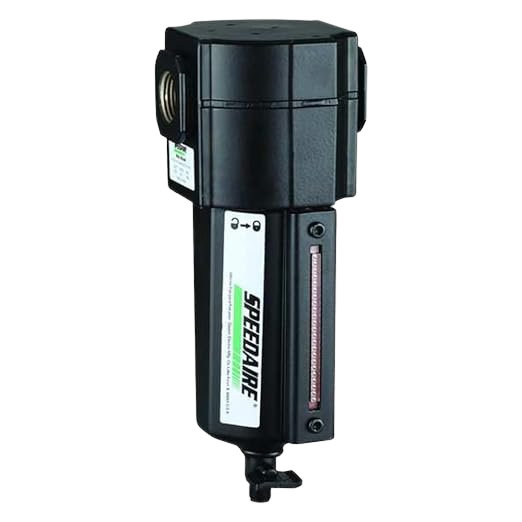
Most Popular Speedaire Air Line Filters
These filters keep showing up in shop air systems because they do the job reliably without requiring constant attention.
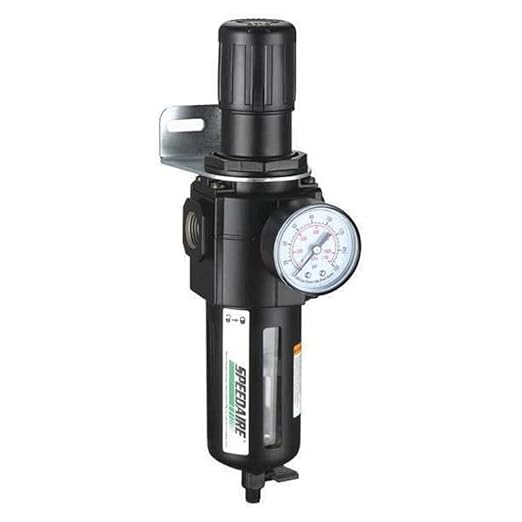
Speedaire, 4ZL02, Filter/Regulator
Purifies air, stabilizes pressure and protects the pneumatic system.
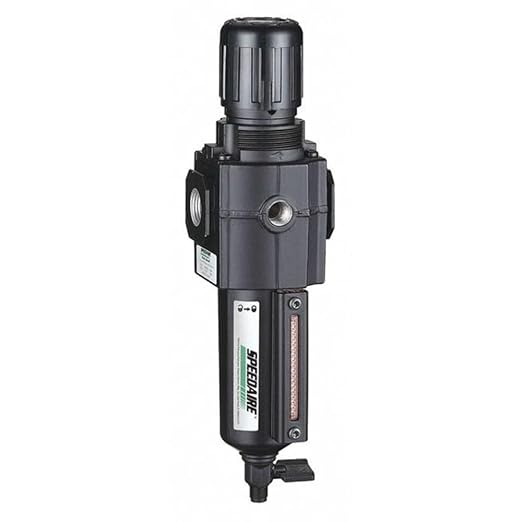
Speedaire, 4ZK86, Filter/Regulator
Provides air purification and precise pressure regulation.
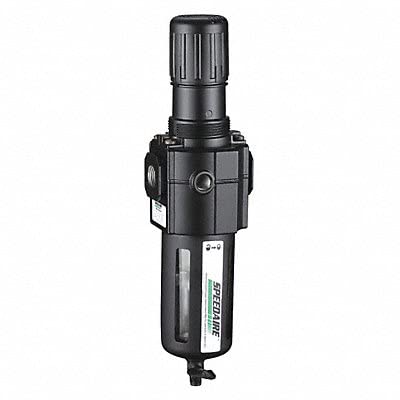
Speedaire, 4ZK99, Filter/Regulator
Stabilizes pressure, increasing the reliability of the system.
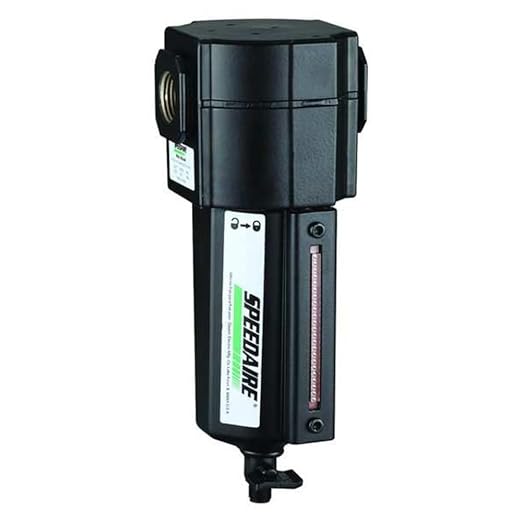
Speedaire Filter,3/4″ NPT,140 cfm,5 Micron
Removes small contaminants, protects the pneumatic system.
Speedaire Air Line Filter FAQ
Install the filter as close to the point of use as practical, downstream of the main air line and upstream of the regulator and lubricator. In a shop with a long distribution line, a coarse filter at the compressor plus a finer filter at each drop point gives the best protection. Make sure the filter is mounted vertically with the bowl facing down so condensate drains into the bowl properly.
Replacement interval depends on the air quality and usage. In a typical clean shop environment, filter elements last six to twelve months. In dusty environments like woodworking shops or construction sites, check and replace the element more frequently. A clogged filter causes a noticeable pressure drop across the unit, which is a good sign the element needs changing.
Manual drain models have a petcock or push-button drain at the bottom of the bowl. Open it briefly each day or after heavy use to release collected water. Auto-drain models open automatically at a set interval or when the bowl reaches a certain level, which eliminates the daily manual step. Auto-drain models are worth the extra investment in high-humidity environments or busy shops.
A particulate filter captures solid particles like rust, pipe scale, and dirt. A coalescing filter does all of that and also removes aerosol oil droplets and fine water mist by causing them to coalesce into larger droplets that drain to the bowl. For spray painting, instrument air, or food-grade applications, a coalescing filter is necessary. For general tool use in a clean shop, a standard particulate filter is usually sufficient.
A single filter at the main supply line provides base-level protection for the whole system. But for applications that are especially sensitive to contamination, like paint booths or precision instruments, additional point-of-use filters provide a second stage of protection right before the equipment. Sizing also matters: an undersized filter restricts airflow, so make sure the CFM rating of the filter matches or exceeds the peak demand of the system.