
Speedaire Air Mufflers That Take the Edge Off Pneumatic Exhaust Noise
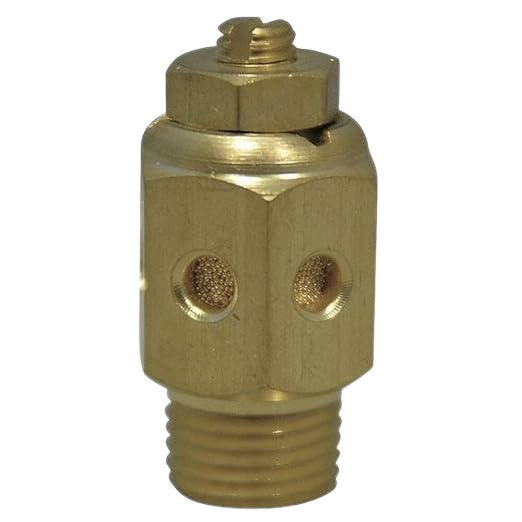
Pneumatic exhaust is loud. Every time a tool cycles or a valve releases air, it sends a sharp blast of noise into the workspace. Speedaire air mufflers absorb that exhaust noise before it escapes, making the shop noticeably quieter without reducing tool performance.
How Speedaire Pneumatic Mufflers Reduce Noise and Improve the Work Environment
Compressed air exhaust noise is one of the most common sources of elevated sound levels in industrial and shop environments. OSHA guidelines recommend protection against sustained noise above 85 dB. Unsilenced pneumatic exhaust from tools, valves, and cylinders can easily push ambient noise levels past that threshold in a busy shop.
Speedaire mufflers thread directly onto the exhaust port of pneumatic tools, valves, cylinders, and compressor intake filters. They use a sintered bronze or plastic element with fine pores that allow air to escape while diffusing the energy of the blast. This diffusion converts what would be a sharp, loud report into a quiet hiss.
Mufflers are available in a range of thread sizes to match the port sizes on different equipment. Common sizes include 1/8 inch, 1/4 inch, 3/8 inch, and 1/2 inch NPT. The correct size is determined by the exhaust port size on the tool or valve, not the air line size
Beyond noise reduction, mufflers also prevent debris and insects from entering the exhaust port and reaching internal components when the equipment is not in operation.
Where Pneumatic Mufflers Are Commonly Used
- Exhaust ports on pneumatic tools like impact wrenches and air ratchets
- Solenoid valve exhaust ports in automated systems
- Pneumatic cylinder rod end exhaust ports
- Compressor intake filters to reduce intake noise
- Air blow guns and blow-off nozzle exhaust points
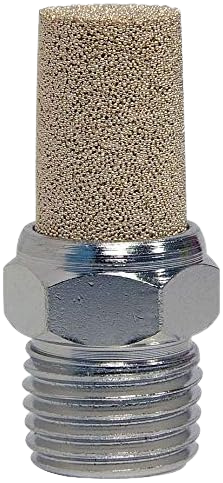
Best-Selling Speedaire Mufflers
These are the muffler sizes that see the most use across auto shops, production lines, and general industrial applications.
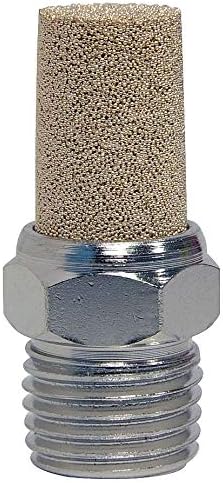
Speedaire Pneumatic Exhaust Muffler – 1A328
Ensures quieter and more stable operation of equipment.
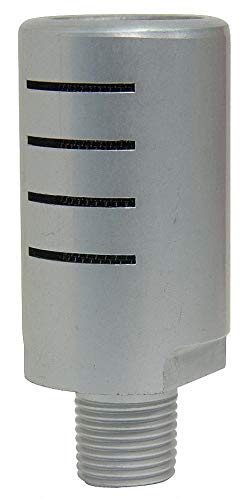
Speedaire 1EJW4, Silencer Muffler
Reduces noise and ensures stable operation of the filtration system.
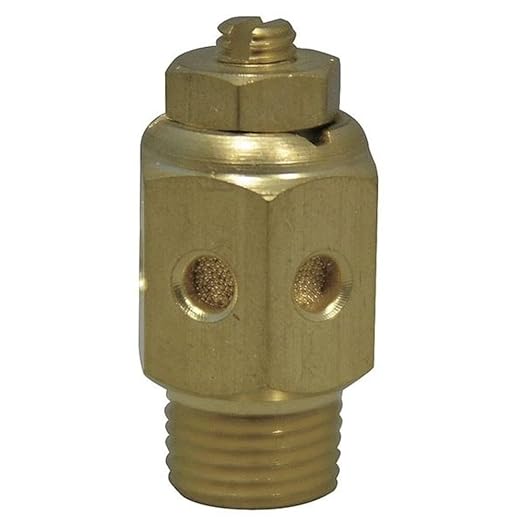
Speedaire, 1EJU4, Speed Control Muffler
Regulates the speed of pneumatic cylinders, reduces noise levels.
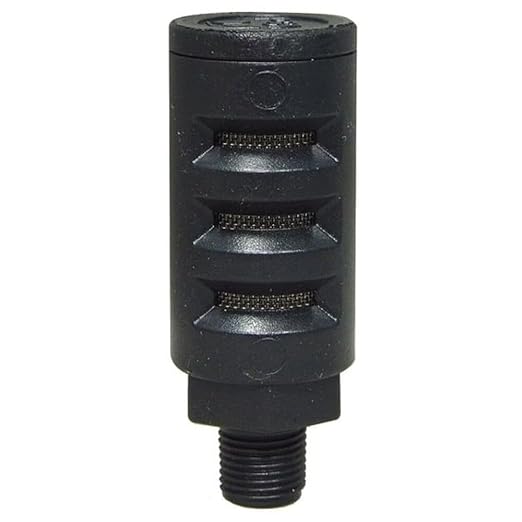
Silencer Muffler,1/8 in MNPT,11/16 Hex
Reduces noise levels and protects the system from contamination.
Speedaire Muffler FAQ
A properly sized muffler has minimal effect on tool performance. The muffler is on the exhaust side of the tool, not the supply side, so it does not restrict incoming air. What it does is slow down and diffuse the escaping exhaust air to reduce noise. The slight back pressure created by the muffler is generally too small to make a measurable difference in tool output.
Match the muffler thread size to the exhaust port size of the tool or valve. Common pneumatic tool exhaust ports are 1/4 inch NPT. Larger valves and cylinders may use 3/8 inch or 1/2 inch ports. Check the tool or equipment manual or measure the port thread with a thread gauge if you are unsure.
Yes. Compressor intake mufflers reduce the noise of air being drawn into the pump. They thread onto the intake port of the pump and use a filter-muffler element that both quiets the intake noise and filters out particles before they enter the pump. This is especially useful for compressors located near workstations or office areas.
The sintered bronze or plastic elements in most mufflers are durable and do not need regular replacement under normal conditions. However, if the muffler is installed on a compressor intake, the element will collect dust and debris over time and should be inspected periodically. A clogged intake muffler restricts airflow into the pump, which reduces output and increases pump temperature. Clean or replace the element if airflow seems restricted.
Yes. Mufflers thread into the exhaust port regardless of whether the valve is manually operated, mechanically actuated, or solenoid controlled. As long as the thread size matches, the muffler functions the same way on any type of valve or directional control component.